Contactless Multi-Axis Precision Positioning
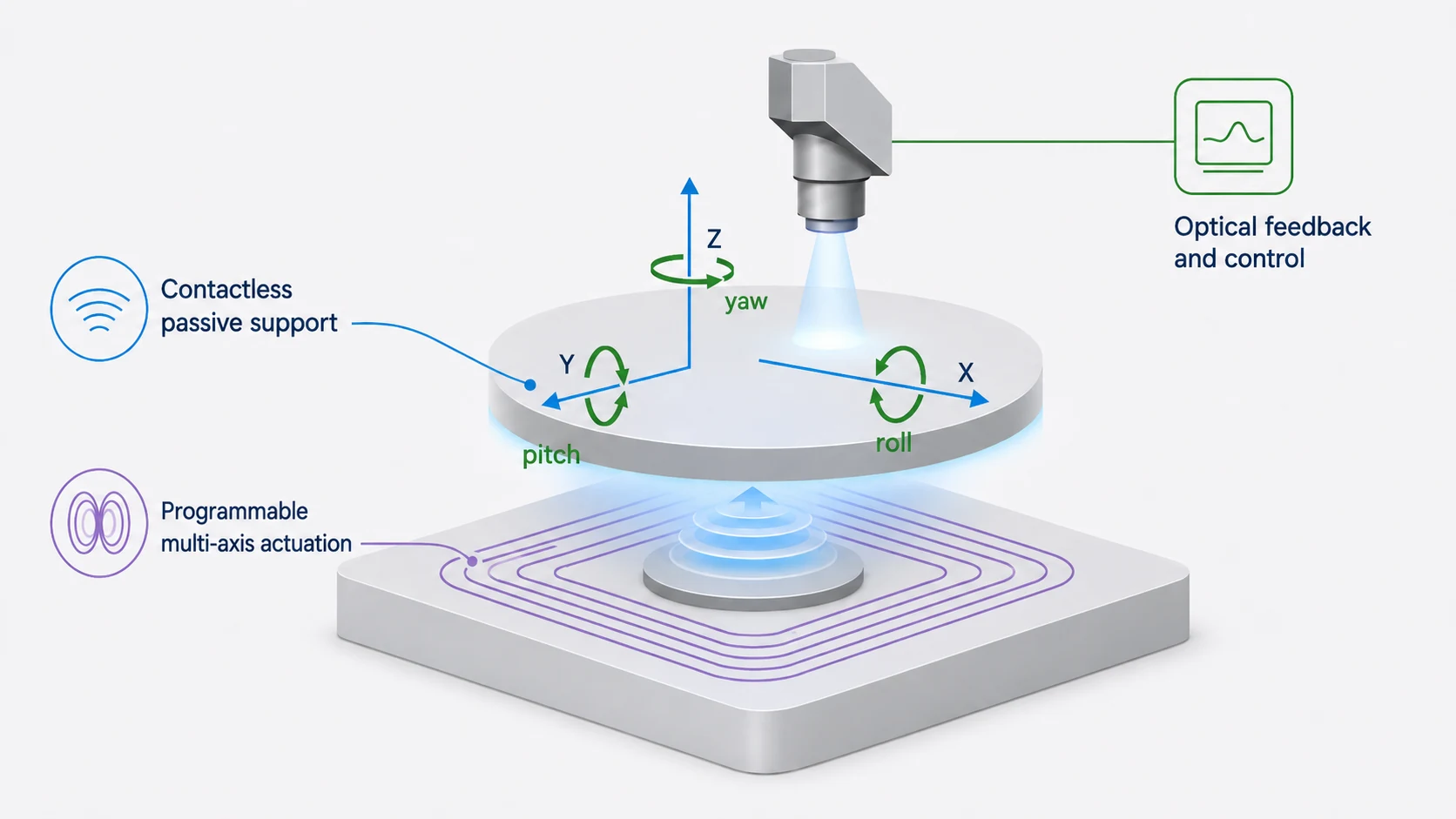
Passive support, programmable actuation, and optical feedback for semiconductor metrology, OSAT, precision assembly, and optical alignment.
PIC Lab co-designs physical mechanisms, actuators, sensors, electronics, estimation methods, and feedback controllers for instruments that must move, image, measure, and interact at micro- and nanometre scales.

Each program is at the concept stage. Founding researchers will contribute from modeling and architecture design through hardware development, control implementation, and experimental validation.

Passive support, programmable actuation, and optical feedback for semiconductor metrology, OSAT, precision assembly, and optical alignment.

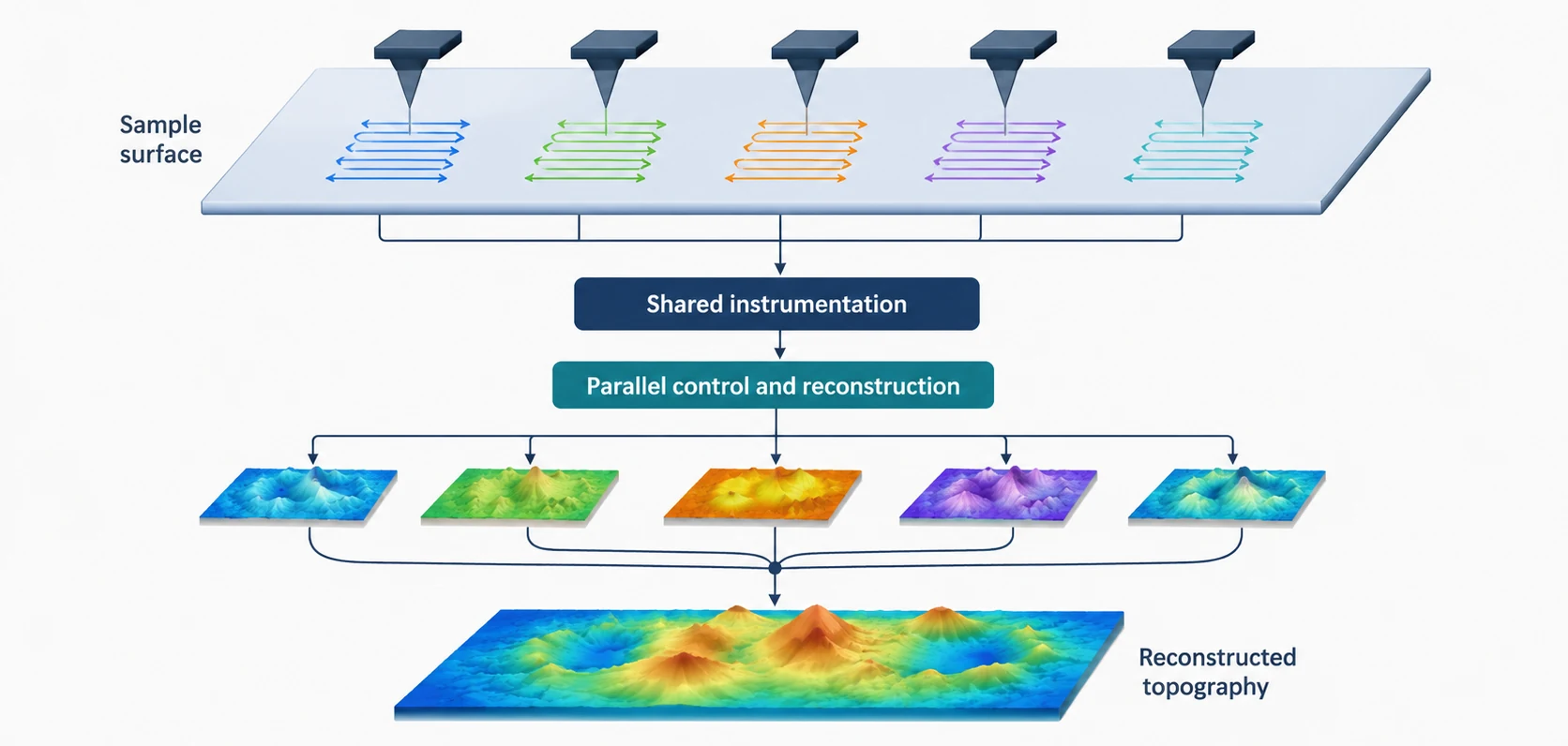
Scalable multi-probe instrumentation with shared hardware, parallel feedback, and coordinated topography reconstruction.

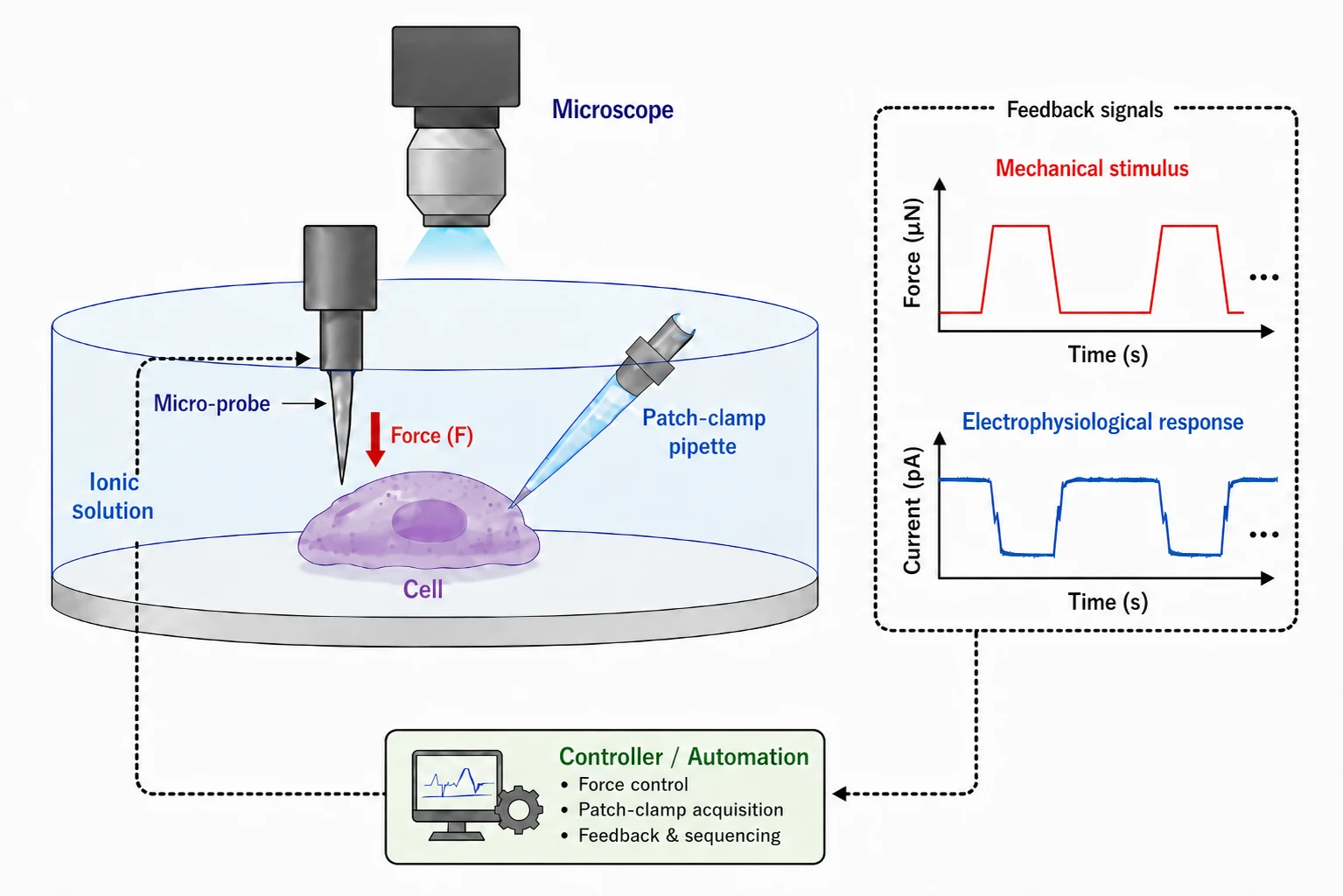
Automated mechanical stimulation, force feedback, patch-clamp acquisition, and synchronized experiment control at the single-cell scale.
Reduce friction, wear, backlash, and guide-related coupling by separating support from conventional mechanical contact.
Co-design planar actuation, integrated force or position sensing, electronics, and real-time measurement.
Use control, machine vision, estimation, and experiment sequencing to transform prototypes into reproducible instruments.
PIC Lab plans to translate the same hardware philosophy into open experimental systems for control, sensing, embedded systems, and precision instrumentation.
The planned platforms will expose the actuator, sensor, signal-conditioning, data-acquisition, communication, and controller layers. Students will be able to characterize individual subsystems and then integrate a complete closed-loop instrument.
PhD students and postdoctoral researchers can help define the first prototypes, establish the laboratory’s experimental workflows, and shape its long-term research culture.